




Carat
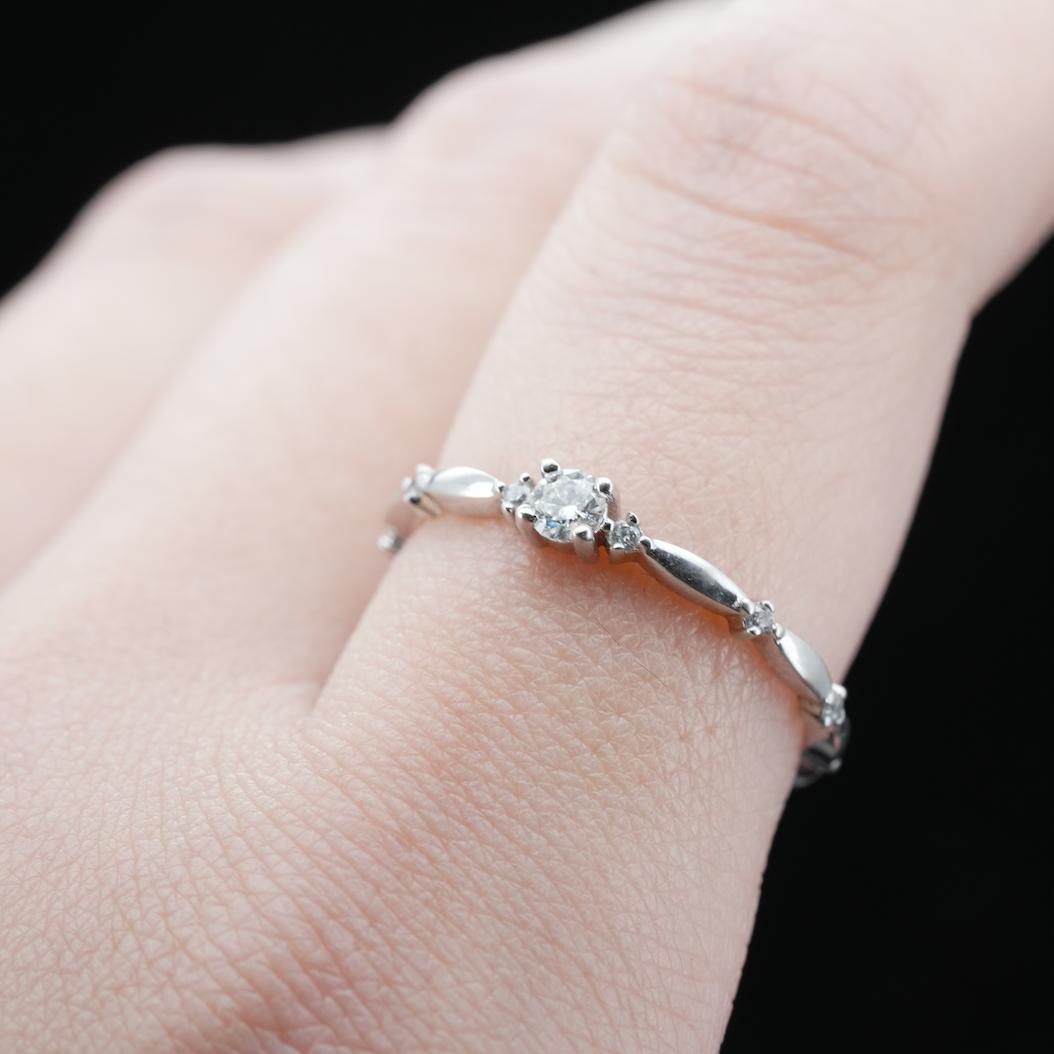
Measures the weight of a diamond, not its size. One carat equals 200 milligrams. The larger the carat weight, the rarer and more expensive the diamond.
This store requires javascript to be enabled for some features to work correctly.


Guide of Diamond 4Cs
Carat
Measures the weight of a diamond, not its size. One carat equals 200 milligrams. The larger the carat weight, the rarer and more expensive the diamond.

Assess the number, size, and location of inclusions and surface blemishes in a diamond. The fewer the blemishes, the higher the diamond's clarity grade and the better its light transmission.

The only factor influenced by human intervention. Precise cutting maximizes the fire, brilliance, and sparkle of a diamond, which is key to its beauty.

Color
The grading system ranges from D (completely colorless) to Z (significantly pale yellow). Colorless diamonds are the rarest and most precious, refracting white light to the greatest extent possible.


Carat is a unit of measurement for diamond weight. One carat equals 200 milligrams (0.2 grams), which can be further divided into 100 points. 0.75 carats is 75 points, and 0.01 carats is 1 point. The value of a diamond is not calculated linearly per point—all other things being equal, an increase in weight will result in a geometric increase in value. Diamonds of the same weight can vary significantly in value due to differences in color, clarity, and cut.


The larger the carat weight, the fewer the production volume. A 2-carat diamond costs more than twice as much as a 1-carat diamond. Rarity determines value.
The larger the carat weight, the fewer the production volume. A 2-carat diamond costs more than twice as much as a 1-carat diamond. Rarity determines value.
While the unit price of melee diamonds under 0.08 carats is low, the cost of setting them increases the total cost, so they are not necessarily cheaper than a single diamond.
While the unit price of melee diamonds under 0.08 carats is low, the cost of setting them increases the total cost, so they are not necessarily cheaper than a single diamond.
If the crown is too large, the depth will be shallow, affecting light refraction. Choosing a diamond with a properly proportioned size will allow it to display its best fire and brilliance.
If the crown is too large, the depth will be shallow, affecting light refraction. Choosing a diamond with a properly proportioned size will allow it to display its best fire and brilliance.


Most inclusions visible only under 10x magnification. The six clarity grades range from FL, IF, VVS, VS, SI and I.


1. Overall Impression
Initial grading based on the overall impression of the diamond from the front
2. Regional Examination
Zooming in for closer inspection, focusing on the top, bottom, left, right, and center
3. Facetature Examination
Carefully observing each facet, including the crown, pavilion, and girdle
4. Integrated Assessment
Reassessing the initial impression to determine the final grade
1. Overall Impression
Initial grading based on the overall impression of the diamond from the front
2. Regional Examination
Zooming in for closer inspection, focusing on the top, bottom, left, right, and center
3. Facetature Examination
Carefully observing each facet, including the crown, pavilion, and girdle
4. Integrated Assessment
Reassessing the initial impression to determine the final grade
Gem-quality diamonds make up under 10% of total diamond production, with VS grade and above being even scarcer. No two diamonds are identical globally; distinct inclusions are key for identification.
Gem-quality diamonds make up under 10% of total diamond production, with VS grade and above being even scarcer. No two diamonds are identical globally; distinct inclusions are key for identification.


Colourless diamonds are usually graded according to the Gemological Institute of America’s (GIA) D-to-Z Scale, which ranges from D (colourless and clear, starting from the first letter of “diamond”) to Z (yellow).


Coloured diamonds(Gemstone) are extremely rare and vibrant in saturation, ranging from pink, blue, green, and yellow to an exceedingly rare red. Therefore, GIA’s D-to-Z Scale is not applicable to coloured diamonds.
The larger the diamond, the more pronounced its yellow tint will be. Diamonds that are only one grade apart (F and G) have significantly different prices; when purchasing, a pragmatic approach is needed to consider the balance between color and price. Professional grading requires the use of color-comparing stones, a diamond lamp, a pure white background, and evaluation by two gemologists.
The larger the diamond, the more pronounced its yellow tint will be. Diamonds that are only one grade apart (F and G) have significantly different prices; when purchasing, a pragmatic approach is needed to consider the balance between color and price. Professional grading requires the use of color-comparing stones, a diamond lamp, a pure white background, and evaluation by two gemologists.


The shape of a diamond is not a factor in judging the quality of its cut. Professionals carefully analyze the diamond before cutting to determine the most appropriate cut, preserving the maximum weight while maximizing its brilliance. The round brilliant cut is the most common, while fancy cuts each have their own unique characteristics.


Any diamond shape that isn't the traditional round brilliant cut, encompassing a wide variety of designs like oval, pear, princess, emerald, and cushion cuts, each offering unique aesthetics, sparkle, and personal style beyond the classic round shape.

